⬆
Drop images to begin captioning
IPTC will be read automatically
Jon Lowenstein
Work
About
Field
Contact
Sign in
← Work
Tester
2000–2012
6 photographs
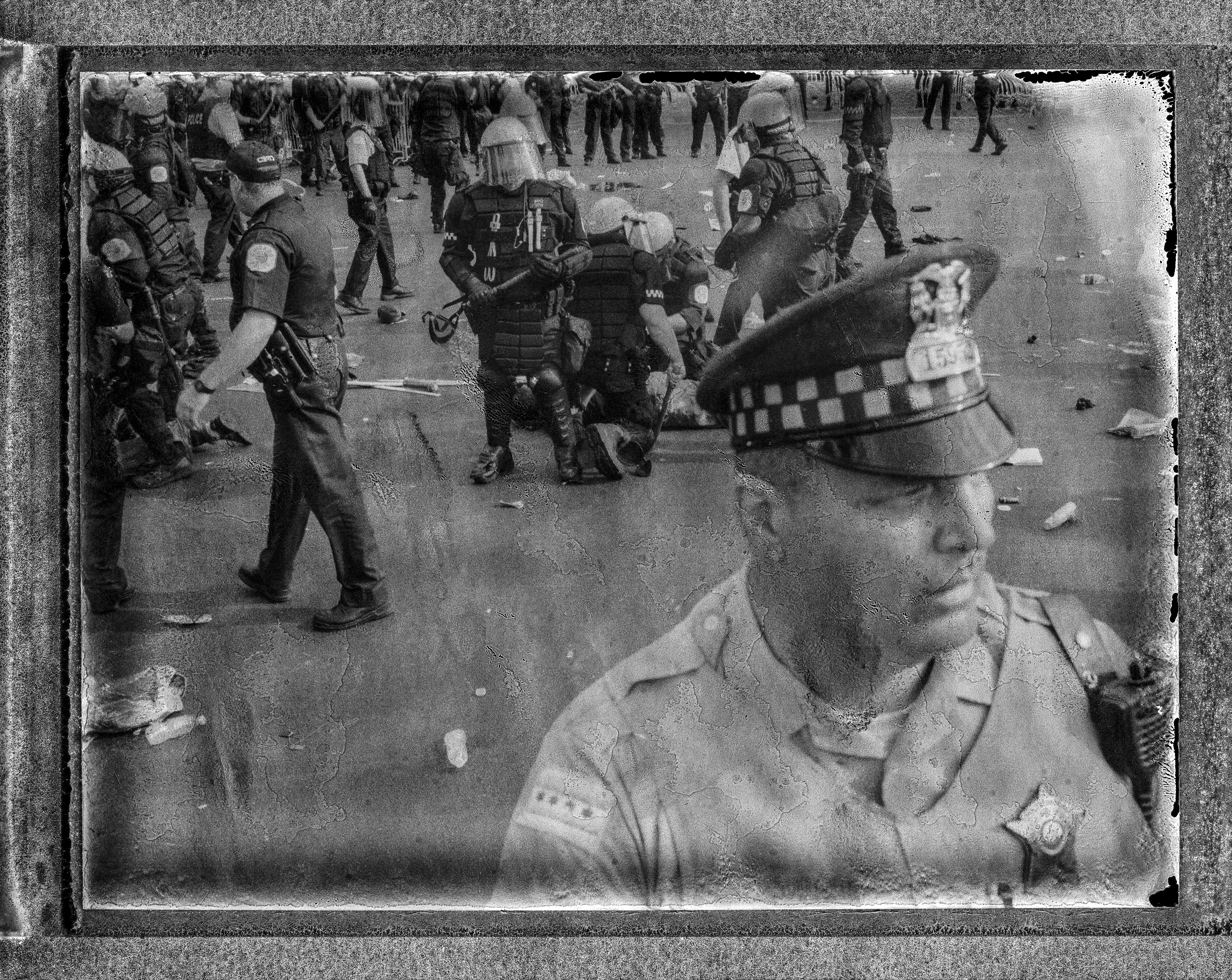
A Chicago Police officer watches the crowd as fellow officers arrest protesters during a melee that ensued after a mostly peaceful march that wound it's way from Grant Park south to Cermak Road on Chicago's near South Side. Protesters clash with police at the intersection of Cermak and S. Michigan Avenue on Chicago's near South Side. The protesters had just finished a mostly peaceful march led by the Iraq Veterans Against the War when the protest turned into a more confrontational situation between police and the marchers. The situation had been brewing for a number of days as protesters from outside Chicago gathered to voice their displeasure for the actions of the North American Treaty Organization. The Chicago Police Department were joined by many other police forces from the surrounding area and states including the Illinois State Police. Their numbers massed more than an estimated 1000 officers throughout the area in anticipation of the planned event. The show of all out force was arguably the largest witnessed in decades in the Windy City. Originally, the G8 and the NATO were planned for this week, but President Obama nixed the idea and moved the G8 to Camp David on the East Coast of the United States. I have spent more than a decade documenting life on Chicago's South Side and seen the impact on the community of the consistent and unending police presence in Chicago's poorest neighborhoods many of which exist less than a mile from where the NATO took place. It was important to document this historic moment in which police and protesters clashed.
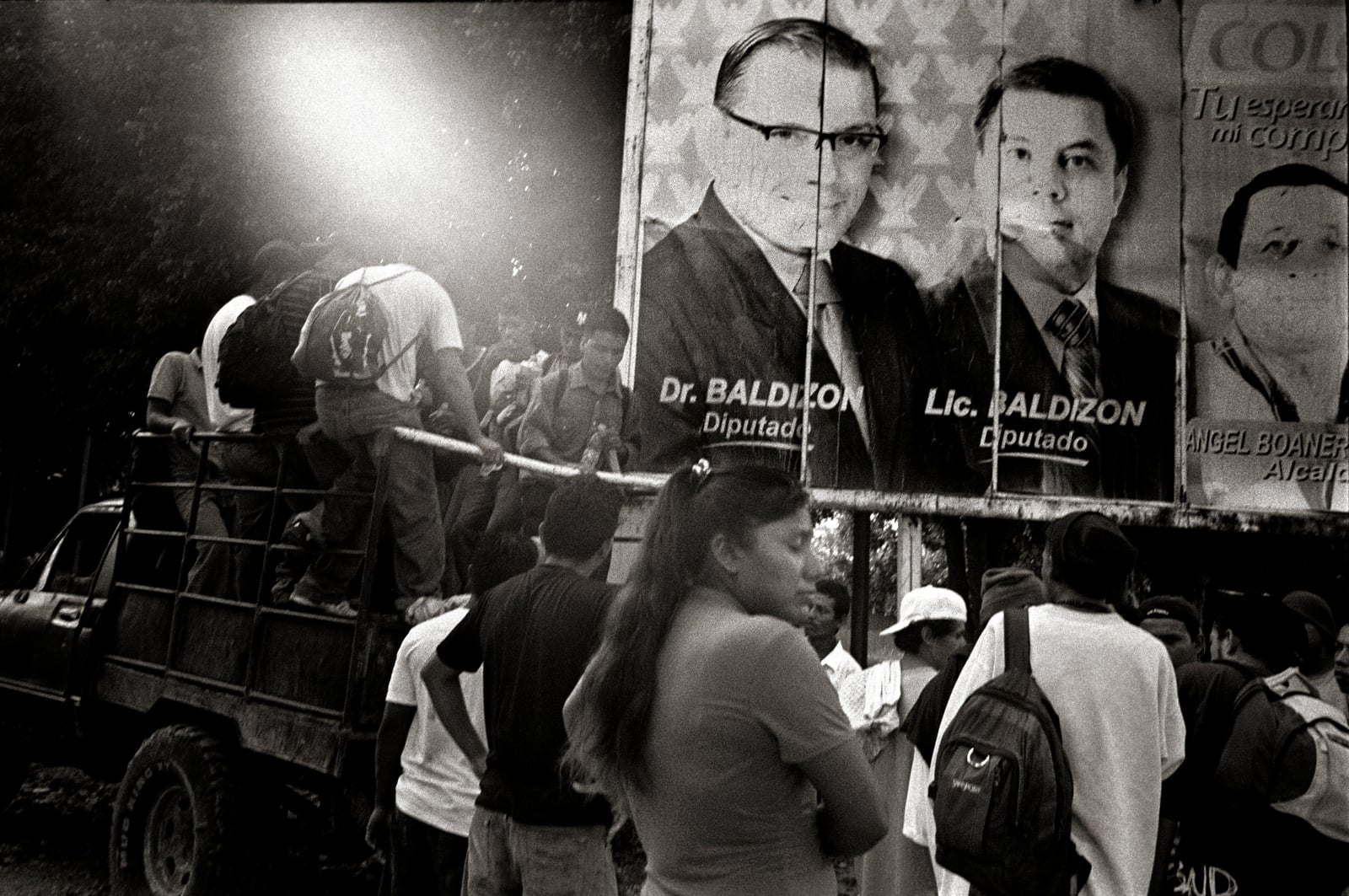
Migrants cross through the Petén jungle in the back of a smuggler’s trucks. Although the Petén jungle is quickly being burned and turned into farm-land, much virgin jungle remains. Because the jungle is still one of the country’s most remote areas, many Central American migrants choose to pass through it on the way Mexico and the United States. The road is treacherous and the men and women often have no idea where they are going. The area is also a popular route from drug smuggling; the migrant smuggling business is largely controlled by the same narco-cartels that control the drug business. Eighty percent of the drugs that make it to the United States today pass through Guatemala. 6292 people were murdered in Guatemala in 2008. Most of them were killed in the capital of Guatemala City. The violence in this small Central American country knows no limits and currently it is one of the most violent and insecure places in the world that is not in a declared state war. People are consistently murdered for their cell phones on the streets, bus drivers are shot in the head in broad daylight in front of crowds of onlookers and people are openly extorted and killed if they do not pay. Violence is on the rise and many here feel that the current government has little or no control over the various forces undermining basic civilian normalcy. As part of a project examining the collective experience of Latin American migrants to the United States I have traveled to Guatemala at least 4 times over the past several years to show the devastating effect that violence has on everyday people in the nation’s capital and demonstrate why some people choose to leave their country’s homeland in search of a better and hopefully safer life in the United States. With the daily drumbeat of intimidation, fear, extortion, and murder continually met with impunity, the local population grows increasingly desperate. Because the police often do nothing, it is not uncommon for street justice to take over, with mobs clamoring to protect their neighborhoods and enforce provisional order. This body of work attempts to show shows the bloody impact of organized crime, ineffectual government and grinding poverty on everyday working people.
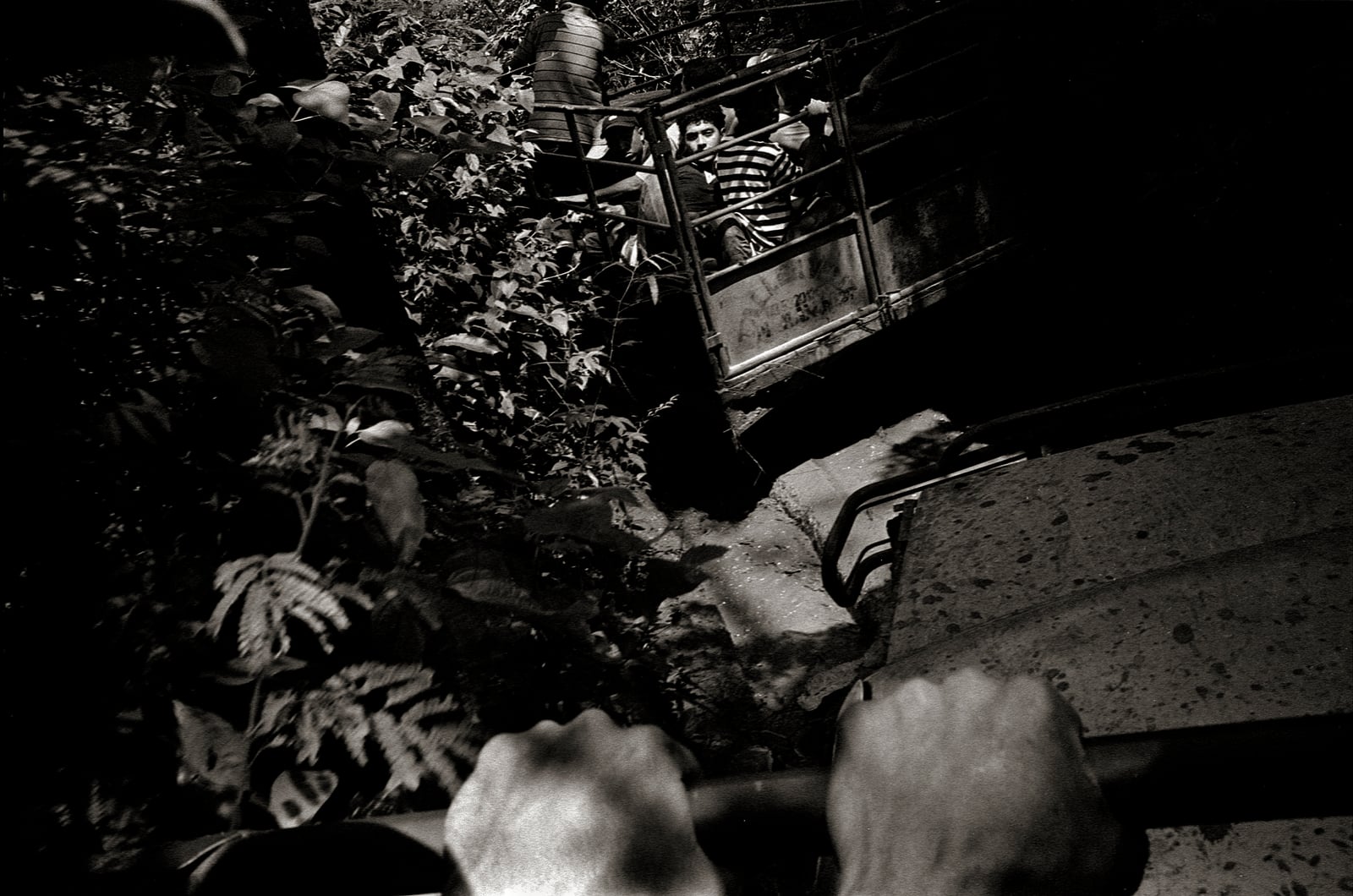
Central American migrants pile onto a smuggler’s truck just across the river from Naranjo, Guatemala. The truck transports them through the Petén jungle and drops them close to the Guatemala/Mexico border. The migrants each pay 150 quetzales or about 20 dollars to ride on a six-hour drive through the jungle. During the dry season the trip only takes about two hours, but during rainy season the road becomes almost impassible and the giant ruts occasionally make the trip last close to eight hours. The trucks’ beds have been replaced by steel-caged bars and are used to haul cattle in many parts of Guatemala. They hold as many as 20 migrants and sometimes tip over, sending the passengers flying out of the truck into the jungle. As the trucks snake through the jungle, monkeys can be seen overhead. The drivers go as fast as they can while the migrants hold onto the bars for dear life. Each time a branch whips by overhead the passengers duck to avoid losing an eye. The migrants prefer this route to the shorter, far more dangerous routes where bandits consistently wait to rob, kidnap, extort or murder unsuspecting travelers. 6292 people were murdered in Guatemala in 2008. Most of them were killed in the capital of Guatemala City. The violence in this small Central American country knows no limits and currently it is one of the most violent and insecure places in the world that is not in a declared state war. People are consistently murdered for their cell phones on the streets, bus drivers are shot in the head in broad daylight in front of crowds of onlookers and people are openly extorted and killed if they do not pay. Violence is on the rise and many here feel that the current government has little or no control over the various forces undermining basic civilian normalcy. As part of a project examining the collective experience of Latin American migrants to the United States I have traveled to Guatemala at least 4 times over the past several years to show the devastating effect that violence has on everyday people in the nation’s capital and demonstrate why some people choose to leave their country’s homeland in search of a better and hopefully safer life in the United States. With the daily drumbeat of intimidation, fear, extortion, and murder continually met with impunity, the local population grows increasingly desperate. Because the police often do nothing, it is not uncommon for street justice to take over, with mobs clamoring to protect their neighborhoods and enforce provisional order. This body of work attempts to show shows the bloody impact of organized crime, ineffectual government and grinding poverty on everyday working people.
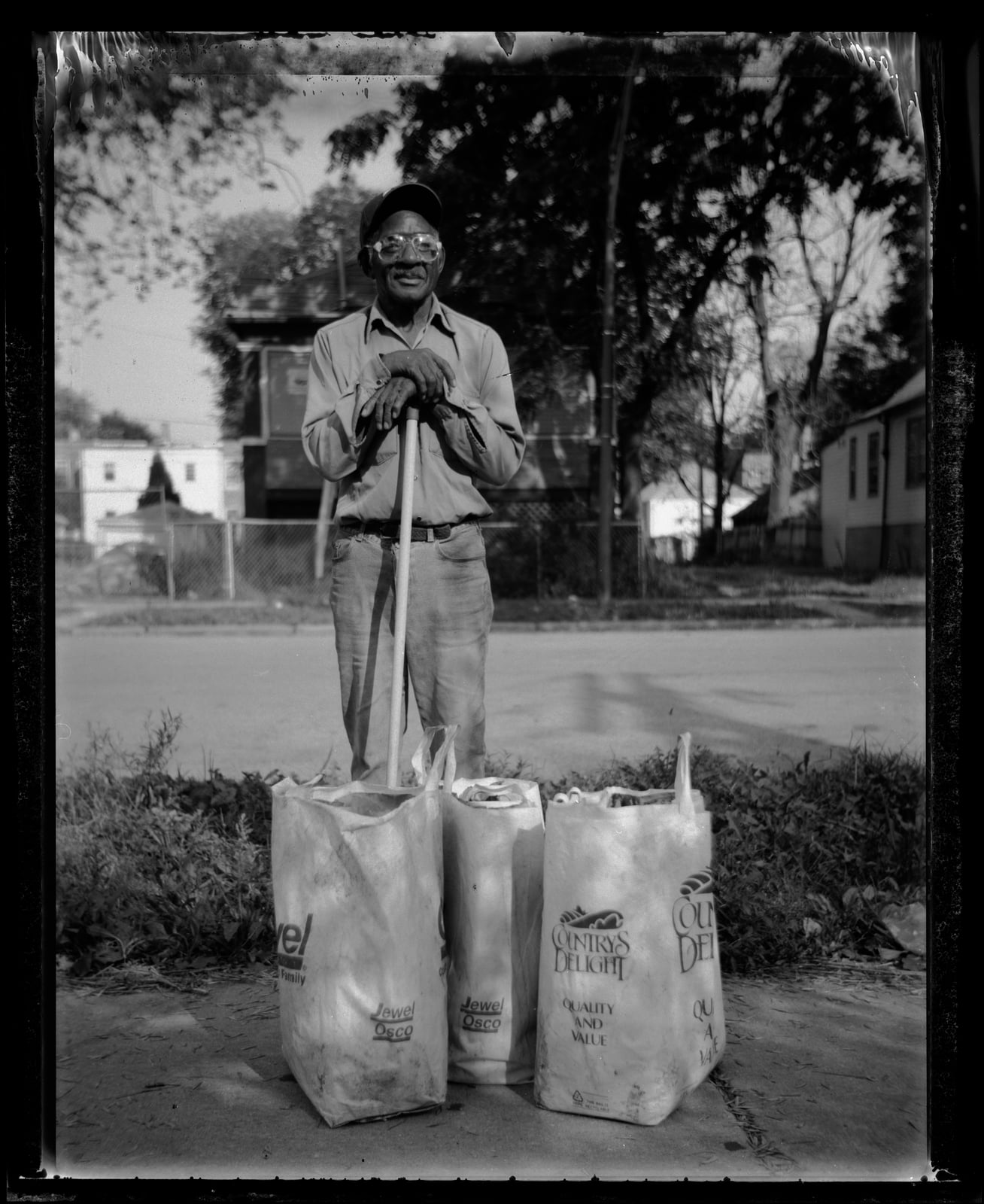
An elderly man collects cans to recycle and poses for his picture on the 7200 block of S. Dobson.
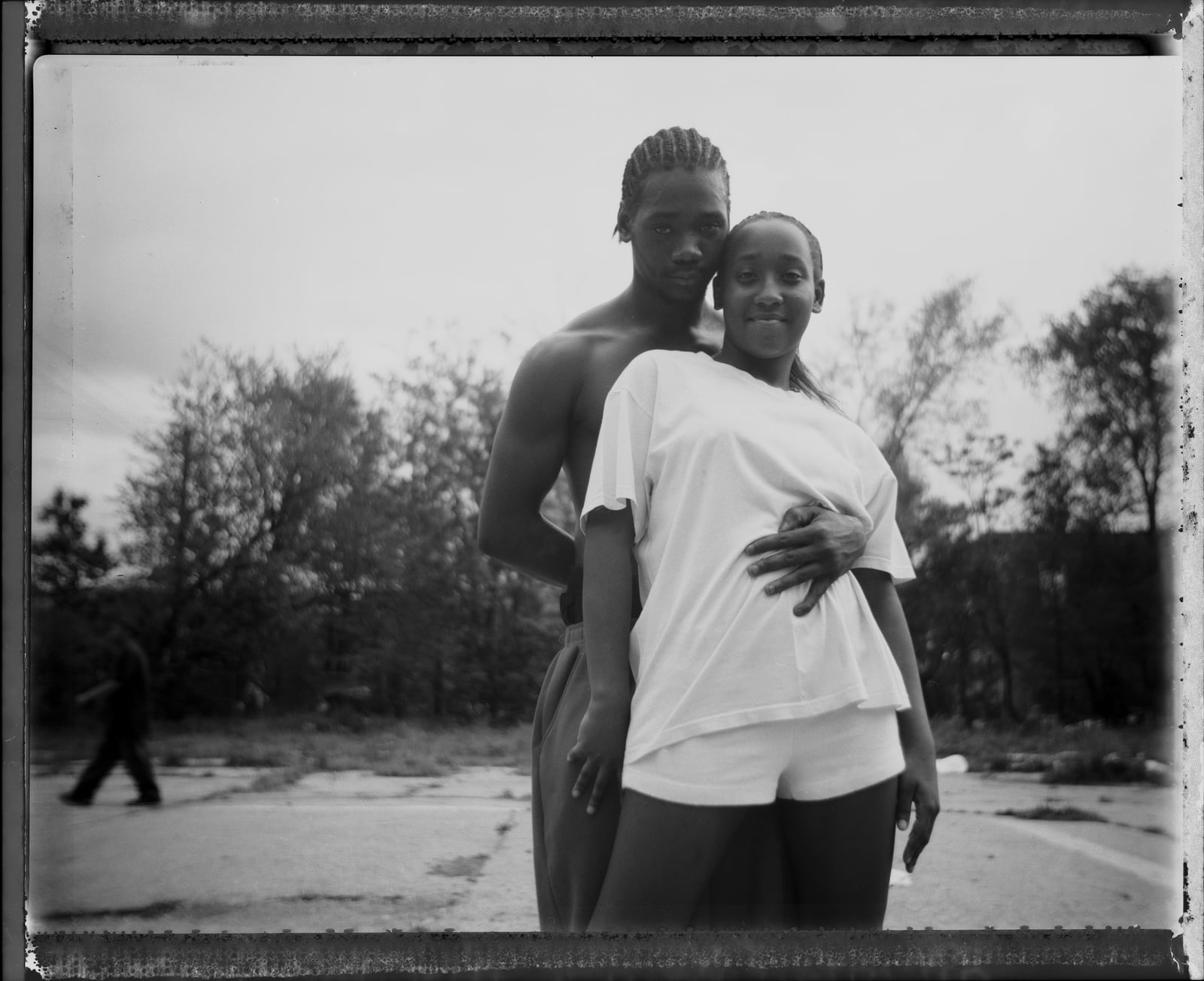
Sade Macklin and Horace ?
Chicago, Illinois, USA - August 2000. The Loop is what locals call the historical center of downtown Chicago. Most accurately, the term refers to an area bounded by a public transit circuit along Lake Street on the north, Wabash Avenue on the east, Van Buren Street on the south, and Wells Street on the west, but in general use it refers to the whole central business district. Chicago's central business district, bounded on the west and north by the Chicago River, on the east by Lake Michigan, and on the south by Roosevelt Road is the second-largest in the United States, after Midtown Manhattan. The term The Loop has different meanings. The term most explicitly applies to the area surrounded by The Loop (CTA) circuit formed by 'L' train tracks, and a preceding 1880s streetcar loop, but common usage defines it as the area bounded by the Chicago River on the north and west sides, Congress Parkway to the south, and Columbus Drive to the east. In official city parlance, delineated by the University of Chicago in the 1920s, the Loop is community area of Chicago number 32, bounded by the Chicago River to the north and west, Roosevelt Road to the south, and Lake Michigan to the east, though the original boundary is strictly the area circled by the elevated CTA tracks. As the downtown area and its many high-rises expanded out past the community area over the years, "The Loop" has been used more generally to denote the entire downtown.